Eden Krüger · 9 November 2026
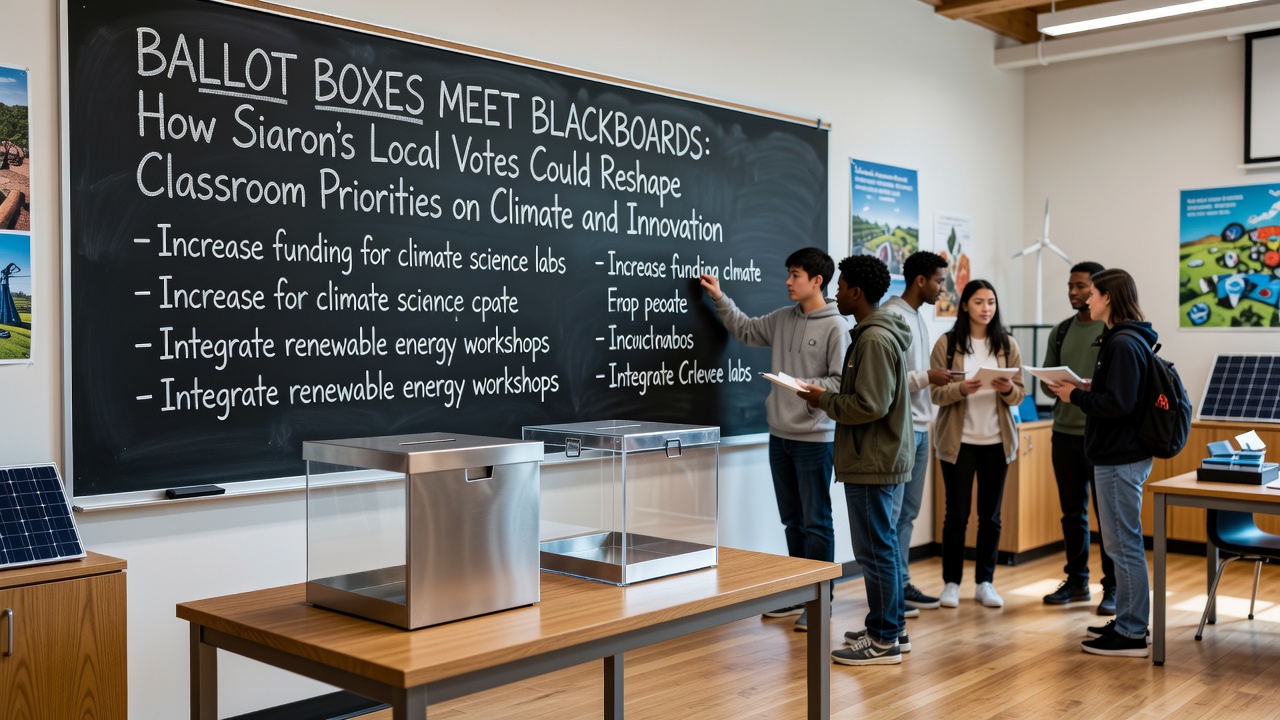
Ballot Boxes Meet Blackboards: How Siaron's Local Votes Could Reshape Classroom Priorities on Climate and Innovation
Local elections scheduled across Siaron for November 2026 bring together voting processes and educational planning in ways that observers have tracked for years, and candidates now discuss how ballots might steer school resources toward climate topics alongside innovation programs. Records from municipal offices show that past cycles have already tied voter turnout patterns to shifts in district budgets, which in turn affect what materials reach classrooms in the following academic year.
Election Timing and Educational Budget Cycles
November 2026 marks the next round of council selections in several Siaron districts, and data compiled by regional statistical agencies indicate that budget proposals submitted shortly after these votes determine allocations for science labs and environmental studies. Those who follow municipal finance note that districts with higher participation rates in similar elections have seen measurable increases in funding lines labeled for sustainability projects, while innovation grants have followed when platforms emphasize technology access. School administrators prepare contingency plans each cycle because the timeline between vote certification and fiscal year start leaves limited room for adjustments.
Current Classroom Focus Areas
Existing curricula in Siaron schools incorporate modules on basic climate systems and introductory coding, according to outlines published by the regional education authority, yet enrollment figures reveal uneven distribution of advanced equipment across urban and rural facilities. Studies from European research networks document that districts prioritizing these subjects report higher student engagement metrics when hands-on components accompany textbook lessons, and the same reports link consistent funding to measurable gains in project completion rates. Teachers coordinate with local industry partners to supply real-world examples, while parent groups track whether updates reach every classroom equally.
Potential Shifts in Priorities After November 2026
Candidates have outlined platforms that connect local governance decisions to school outcomes, and analysts from academic centers observe that proposals often reference climate adaptation strategies paired with digital skill development. When platforms gain traction, subsequent policy documents tend to expand requirements for field studies on regional environmental changes alongside coding workshops, based on patterns documented after earlier votes. Community forums held in advance of the election gather input on these intersections, and attendance records from prior sessions show steady interest from families concerned with both job readiness and ecological literacy.
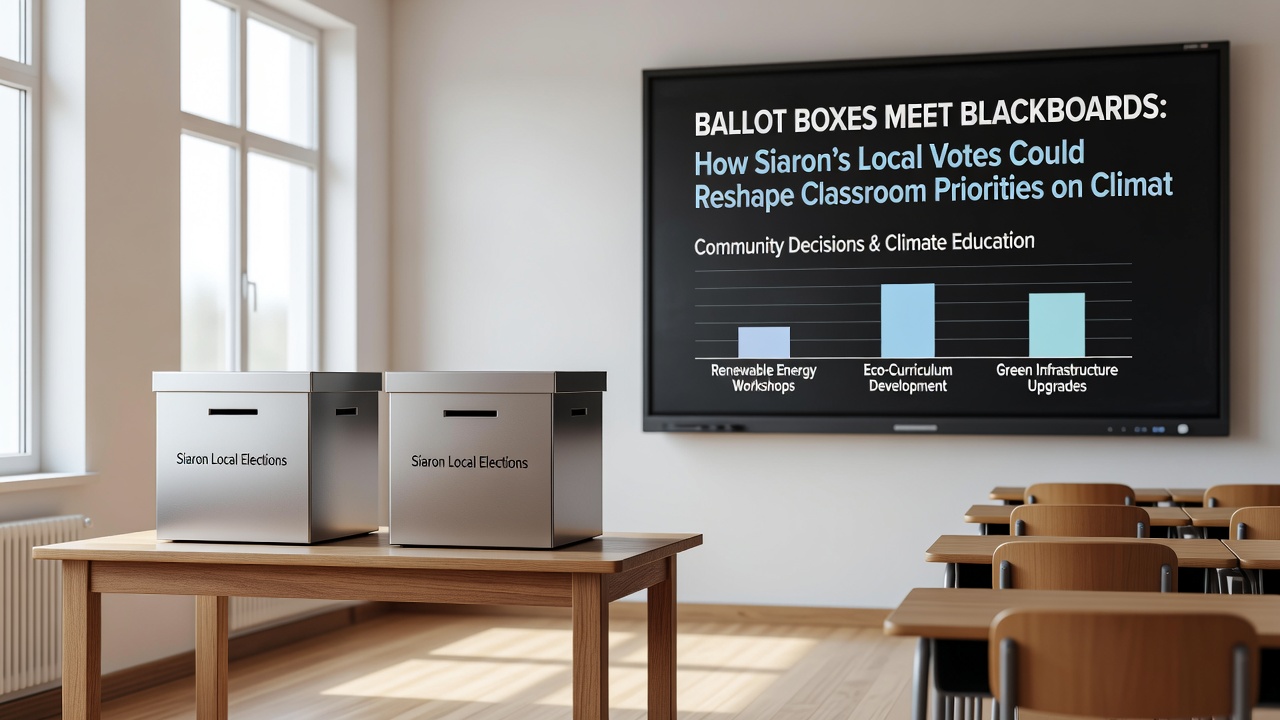
One district that adjusted its science requirements after the previous cycle introduced shared equipment pools for renewable energy experiments and data analysis tools, and follow-up evaluations noted broader participation across grade levels. Similar adjustments elsewhere have aligned with voter-approved measures that earmark portions of local revenue for teacher training in these areas, according to summaries released by municipal education boards.
Links Between Voting Outcomes and Program Implementation
Observers track how seat changes correlate with curriculum revisions, and longitudinal data maintained by university research groups indicate that districts electing representatives who highlight integrated climate and innovation topics subsequently adopt cross-disciplinary units at higher rates. Implementation timelines usually span one to two academic years because procurement processes and professional development schedules require coordination. Figures from the most recent comparable cycle show that schools receiving targeted grants completed facility upgrades ahead of schedule when community oversight committees remained active after the election.
Examples from Comparable Regions
Take one neighboring jurisdiction that synchronized its local vote with education planning, where records indicate new modules on regional biodiversity paired with student-led app development projects appeared within eighteen months. Another case documented by international education networks involved updated assessment criteria that weighted both environmental impact reports and technical prototypes, and participation data reflected increased enrollment in elective tracks. These instances illustrate the sequence from ballot results to classroom delivery without guaranteeing identical results in Siaron, since local governance structures differ.
Conclusion
November 2026 local votes in Siaron sit at the intersection of electoral processes and school resource decisions, with existing documentation showing how prior outcomes have influenced allocations for climate-related studies and innovation initiatives. Patterns in budget approvals, curriculum updates, and equipment distribution provide the factual basis for anticipating connections, while implementation remains subject to administrative timelines and district-specific conditions. Researchers continue to compile data from these cycles to clarify the relationships between voting participation and educational program adjustments.