Ines Brooks · 14 September 2026
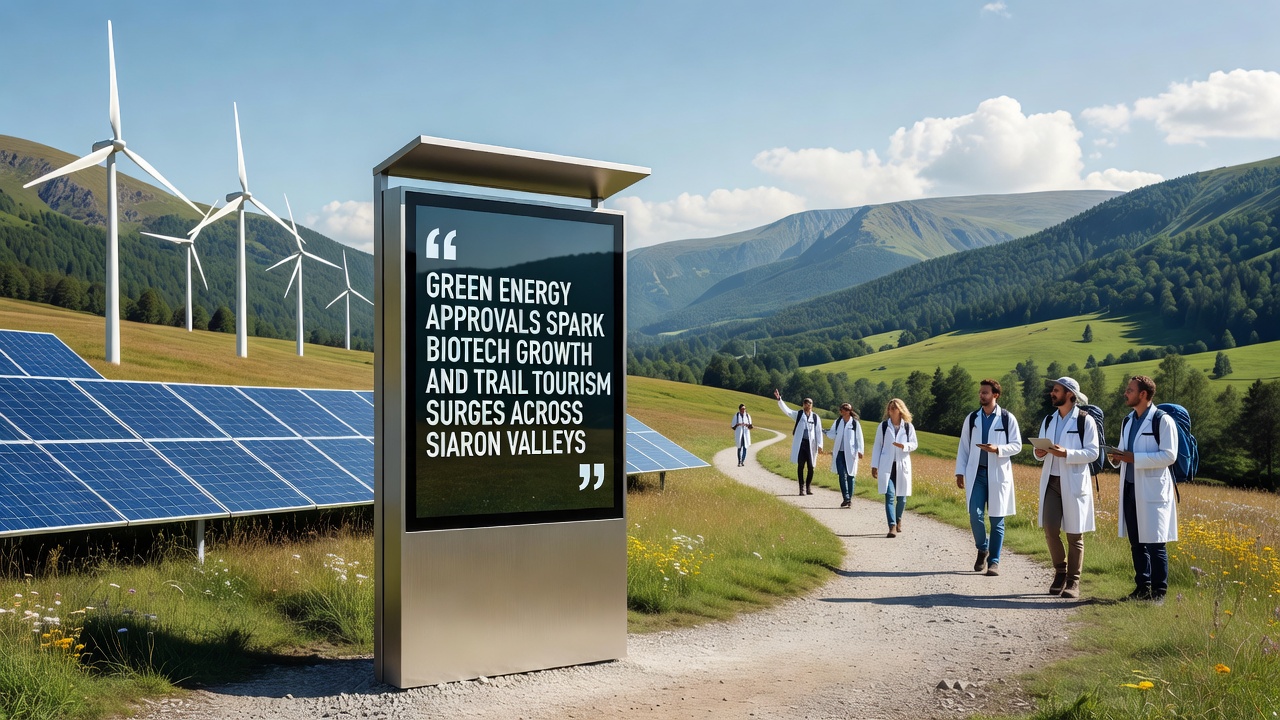
Green Energy Approvals Spark Biotech Growth and Trail Tourism Surges Across Siaron Valleys
Approvals for multiple green energy projects cleared regulatory hurdles in September 2026 across the Siaron Valleys, and these decisions have already begun to reshape local economic patterns in measurable ways. Officials processed permits for solar arrays, wind turbines, and small-scale hydroelectric upgrades during that month, with construction crews breaking ground on several sites by early October. Data from regional planning offices indicate that the combined capacity from these installations will reach 450 megawatts once completed, a figure drawn from project filings submitted earlier in the year.
Project Approvals and Infrastructure Timeline
Engineers submitted detailed environmental assessments for each site, and reviewers in the valleys confirmed compliance with updated sustainability standards before granting final sign-off. Construction schedules now list phased rollouts through 2028, beginning with access roads and foundation work in the lower elevations. Local utilities have started integrating new transmission lines to connect these facilities to the broader grid, while crews install monitoring equipment to track output and environmental impact in real time.
Funding packages for the projects combine public grants and private investment, according to records from the Siaron Regional Development Authority. One project near the eastern ridge incorporates battery storage units rated at 120 megawatt-hours, a specification listed in the original proposals. Observers note that these elements align with broader European renewable targets referenced in reports from the International Energy Agency.
Biotech Sector Expansion Linked to Energy Infrastructure
Biotech companies have announced new research facilities in the valleys since the energy approvals became public, and several firms cite reliable clean power as a key factor in site selection. Three laboratories specializing in agricultural biotechnology and enzyme development broke ground in October 2026, with initial operations scheduled to begin by mid-2027. Employment figures from these projects show plans to hire 180 specialists in the first two years, numbers reported directly in corporate announcements.
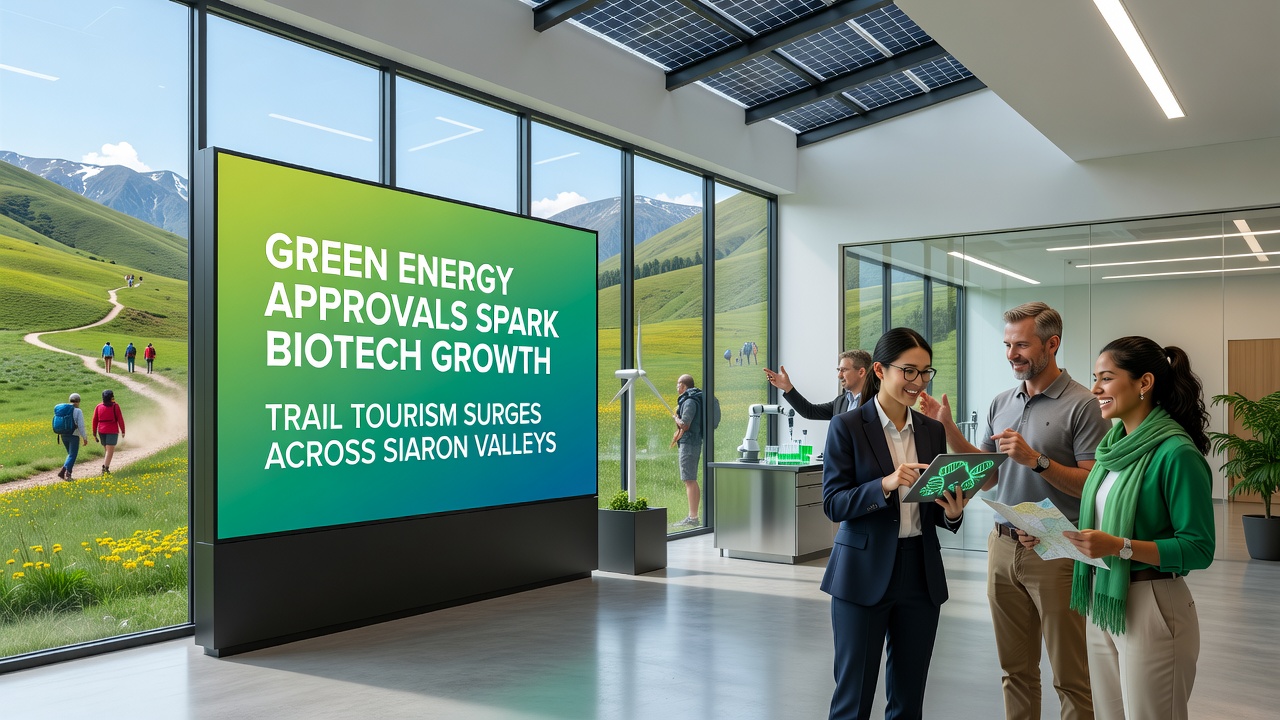
Existing facilities have also expanded their footprints, adding modular clean rooms powered by the incoming renewable supply. Studies from university partners in the region document how consistent energy access reduces operational costs for temperature-sensitive processes, a point highlighted in technical papers published by the Siaron Institute of Applied Sciences. Equipment suppliers report increased orders for bioreactors and sequencing machines, with deliveries tracked through logistics data released in late 2026.
Trail Tourism Growth and Visitor Patterns
Trail networks throughout the valleys have recorded higher foot traffic following the energy project announcements, and tourism boards attribute part of the increase to new interpretive sites near construction zones. Visitor counts from trailhead counters rose 28 percent between September and December 2026 compared with the same period the previous year, according to aggregated data from the Siaron Outdoor Recreation Council. Guided tour operators added routes that highlight both the natural landscape and the renewable installations, with bookings logged through central reservation systems.
Accommodation providers along the main valley routes extended their seasons and upgraded facilities to handle the additional demand. Figures released by the regional tourism authority show occupancy rates climbing steadily, while trail maintenance crews received supplemental funding to address wear on popular paths. Educational programs at several trail centers now incorporate information about the green energy transition, drawing on materials prepared in coordination with project developers.
Interconnections Across Sectors
Local governments have coordinated permitting processes so that biotech construction and trail improvements can proceed alongside energy work, minimizing disruptions to shared access routes. Reports from the valleys detail joint planning meetings held in October 2026, where representatives from all three sectors aligned timelines for road upgrades and utility extensions. This approach has allowed equipment transport for the laboratories and tourism infrastructure to use the same improved corridors built for turbine components.
Supply chains have adapted accordingly, with local firms providing materials for multiple projects simultaneously. Procurement records indicate that concrete, cabling, and specialized sensors now flow through shared distribution points, a setup described in industry briefings from the European Renewable Energy Council. Training programs offered through community colleges have enrolled participants interested in roles spanning construction, lab support, and trail guiding, with enrollment data tracked through the Siaron Workforce Development Office.
Conclusion
Records compiled through the end of 2026 show that the green energy approvals continue to influence investment decisions and visitor behavior across the Siaron Valleys. Project milestones remain on schedule, while biotech expansions and trail usage metrics reflect the broader shifts underway. Ongoing data collection by regional authorities will track these developments through subsequent quarters, providing updated figures on capacity additions, employment totals, and recreational participation.